
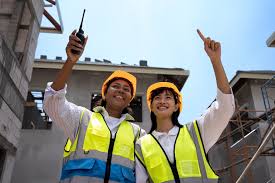
When you think of jobs in the construction industry, the first thing that comes to mind is the people who make up the trades in construction, such as plumbers or electricians, carpenters, and even constructioworkerser. Based on your experience, you may consider the different careers that are available to those in the field of construction, such as a construction manager or a civil engineer.
If you think about those workers, what do they appear like?
Chances are that the person you think of is likely not female. The perception of women in construction needs to be changed regarding construction workers (or in general, any gender in different occupations).
Construction companies are evolving. The construction industry and its related areas are evolving and broadening their opportunities to accommodate the increasing number of women who decide to pursue this career toward a prosperous future.
Construction work is no longer considered to be a “man’s job.” Research and statistics show that. Over the past decade, the number of women employed in construction has been gradually increasing to levels higher than at any time in the history of construction. The National Association of Women in Construction reports that women account for approximately 11% of America’s construction workers.
So, if you’re looking into one of the career options in the construction sector, take a look at the reasons we, as an organisation, think now is the ideal opportunity to explore a career that involves construction. Also, we will discuss many jobs in the construction industry, and the resources to take the first step toward a career as a construction worker.
Benefits of Construction Jobs for Women
1. Pay Equality
There is a pay disparity that’s much smaller than in other sectors. The most common misconception regarding women who work in the construction industry is that there’s a large pay gap. This means that they don’t earn more than men in similar roles.
In all fields, construction leads in the fight to close the pay gap in paygap between men and women and genders. On average, females working in construction jobs across construction in the U.S. earn 82.9 per cent of what men earn, according to the National Association of Women in Construction. In the construction industry where women are paid on average 95.5 per cent of what men earn.
At Ryan, we strive to offer fair and equitable pay packages to all our employees. Find out more about the benefits we provide on this page.
Although we recognise that there’s still plenty of work to be done to reduce the gender gap, the construction sector has shown promising potential for women.
2. Demand for Top Talent
The construction industry in general is growing, and there’s plenty of demand for trade and construction workers. According to the most recent data from the Associated Builders and Contractors, the construction industry will have to hire nearly 439,000 net new employees by 2025 in order to meet the projected need for construction services. This is a substantial number that highlights the continuing demand for skilled workers in the construction industry.
When you choose to work in the trades of construction trades, or in the field of construction, it is a good idea to feel confident about joining a field that will give you a chance to work throughout your life.
3. Wide Range of Roles
Another popular misconception regarding building work is the notion that it’s just physical work or that you have to be physically strong to complete the tasks effectively. This isn’t the case. There are a variety of jobs and responsibilities in the field of construction that require a strong mental capacity to solve problems rather than physical strength or a background in physical work. Consider jobs that require managing or coordinating construction projects, such as the construction manager, for instance. If you have a great organisational ability, the management aspect of construction may offer numerous career possibilities.
These kinds of jobs are essential to ensure that an area of work is successful during the construction process and can prove the fact that building is a viable career choice for any gender who is interested in this career path, regardless of their physical strength.
4. Hands-on Experience
In the construction field, the requirements for education and qualifications will vary based on the position or trade. There are a few jobs in the construction industry that do not require a college education, but usually a GED or equivalent experience. Many workers get their start through an apprenticeship program, which integrates job-related training and classes to prepare an individual to be skilled in trades. The tradesperson is able to get hands-on work experience along with real-world experience, as well as technical instruction.
For certain jobs, such as a construction manager, for instance, you’ll require a degree in construction management. This provides you with education and also an opportunity to gain practical experiences that can be directly transferred into the workforce.
If you’re seeking an opportunity within the trades, a skilled or job site manager position, you should take a look at resources such as the National Association of Women in Construction. They have numerous collaborations with construction companies or unions and also offer scholarships to students attending trade schools in every state.
5. Earning Potential
With a variety of roles that offer the opportunity for growth and development, as well as a need for new construction projects all over the nation, as well as a need for women’s talents, skills, and abilities in the construction industry, it is a thriving area. Women who work in construction have the potential to earn wages that are much higher than those with a college degree, especially if they are in charge of projects and are responsible for managerial responsibilities.
In addition, the construction industry is ripe to grow (which typically leads to wariness) because of the wide variety of management roles and positions. In addition to the high wages, Construction workers often enjoy excellent benefits that allow them to create their lives in which they are able to provide for their families and themselves and enjoy a significant boost in their satisfaction and sense of fulfilment both at work and at home.
Best Construction Jobs for Women
Construction has a variety of jobs that are compatible with women’s backgrounds, s, as well as interests and capabilities. Each job offers unique opportunities for employees to develop within the construction field and to increase their professional development (and typically, their pay). These are the most common construction jobs that offer women the opportunity to be a part of the team as well as at work:
- Project Manager. Supervises and coordinates the design and execution of construction projects. They assist in creating timelines and ensuring the success of each phase that the work. The importance of organisation is paramount in maintaining strong relationships with different teams working on the job site in order to ensure that the project gets to the finish line.
- Project Engineer. The project engineer is responsible for providing direction and coordinating engineers on their job sites. They also analyse the bid and design documents, assess bids from contractors, and monitor progress on projects, as well as scheduling and systems. They usually spend half of the time in the office and the other half in construction, providing support and assistance, and direction in both fields.
- Project Coordinator. Participates in construction projects while overseeing day-to-day projects, responsibilities for the project, management, and workflow. They are capable of resolving problems and supporting the project’s processes and projects, as well as identifying resources to finish each task successfully.
- Field Engineer. Designplansan,s and manages the infrastructure of buildings, assisting in solving problems and providing assistance mostly in the field.
- Civil Engineer. Design and supervise project designs and drawings to ensure efficient and effective project construction as well as maintenance.
- Superintendent. Supervises all members of the project team, as well as subcontractors, to supervise the project and manage the schedule of the project. Manages day-to-day operations and makes sure that workers on the construction site are adhering to OSHA safety guidelines.
- Preconstruction manager. Plan the work before breaking ground for a building. Most often, he conducts studies to determine costs and also reviews plans, designs, engineering, scheduling, contract management, and so on.
- Heavy equipment operator. Employs machinery and other tools for heavy equipment to assist in completing tasks and get the project to the end. Transports earth, supplies heavy materials, etc, to prepare the construction site.
- Carpenter. Builds, repairs, and puts in foundations, frames and floors, beams, walls, roofing systems, a nd much more.
- Virtual Construction Manager. Make use of technology and tools to manage virtual projects and to create 3D designs and models of construction sites.
What Next?
For women who are interested in exploring an occupation in the construction industry, you can find plenty of tools, programs, and resources to assist you in taking the first step towards exploring these careers.
Here are a few suggestions for how you can connect with others and learn more about:
- Meet women who work in the construction field. Google is at your disposal and is a great start, offering helpful advice to connect you to women who have experience in the construction field. You can search LinkedIn for women who hold construction-related jobs. Look up companies in the construction industry (like Ryan Companies!) in your area, and then call them through the Human Resources department. They will connect you to employees from the Employee Resource Group who are women-oriented or direct you towards the right direction for you for information and assistance regarding the construction business.
- Join one of the programs for apprentices. To gain hands-on experience as well as discover more about the career path you’d like to pursue, think about an apprenticeship program that is focused on building a career in the field of construction. Learn the requirements for the job and improve your skills and meet women working in the field, and build your circle of friends. An apprenticeship program assists women in the construction industry to establish an enduring foundation of skills in the field they wish to work in, but it is often less expensive than college, and the training offered by an apprentice through an apprenticeship program is usually provided by the employer and trade unions.
- Contact an industry group or similar programs. Many organisations cater to women working in the construction trades to assist and support women who are specifically employed in trades organisations and those working in construction-related jobs or related fields. They are dedicated to helping women develop their careers in the field of construction, providing an excellent starting point to build connections and a sense of community in your field, such as:
Construction
Jobs provide women with an opportunity to establish a successful career while opening up doors to the next generation of workers, inspiring more women to pursue male-dominated careers. As more women are enrolled in the construction industry and other related fields, society will increase its diversity, accepting all genders and advancing in equality. Everyone can choose a career path that matches their strengths, talents, and passions. Glass ceilings are a fragile thing, so boundaries break and could break.